
Proper winterization protects your pool from freeze damage and makes spring opening easier. Here's everything NJ pool owners need to know.
Why Winterization Is Non-Negotiable in NJ
New Jersey winters are harsh on pool equipment and plumbing. Water left in pipes, pumps, and filters will freeze, expand, and crack — leading to expensive spring repairs that could have been entirely prevented.
A proper winterization is the single most important maintenance task you can do for your pool. It protects your equipment, preserves your liner, prevents algae buildup, and ensures a smooth, cost-effective opening when spring arrives.
When to Close Your Pool
The ideal time to close your pool in Ocean County is typically between mid-September and mid-October. The key indicator is when daytime temperatures consistently drop below 65°F. Closing too early means your pool sits in warm-enough conditions for algae to thrive under the cover. Closing too late risks freeze damage to equipment and plumbing.
We recommend booking your closing date in August or early September to secure your preferred time. Fall is our second busiest season, and the best dates go quickly.
The Winterization Process — Step by Step
Here's what a complete professional winterization includes:
- Balance the water chemistry — Adjust pH, alkalinity, and calcium hardness to winter-safe levels
- Lower the water level — Typically 4-6 inches below the skimmer opening
- Blow out all plumbing lines — Using professional-grade compressed air to remove every drop of water
- Add winter chemicals — Algaecide, enzyme treatment, and a slow-release floater to keep water stable
- Disconnect and store equipment — Remove pump drain plugs, filter gauges, and chlorinator components
- Install winter plugs — Seal all return lines, skimmer, and main drain fittings
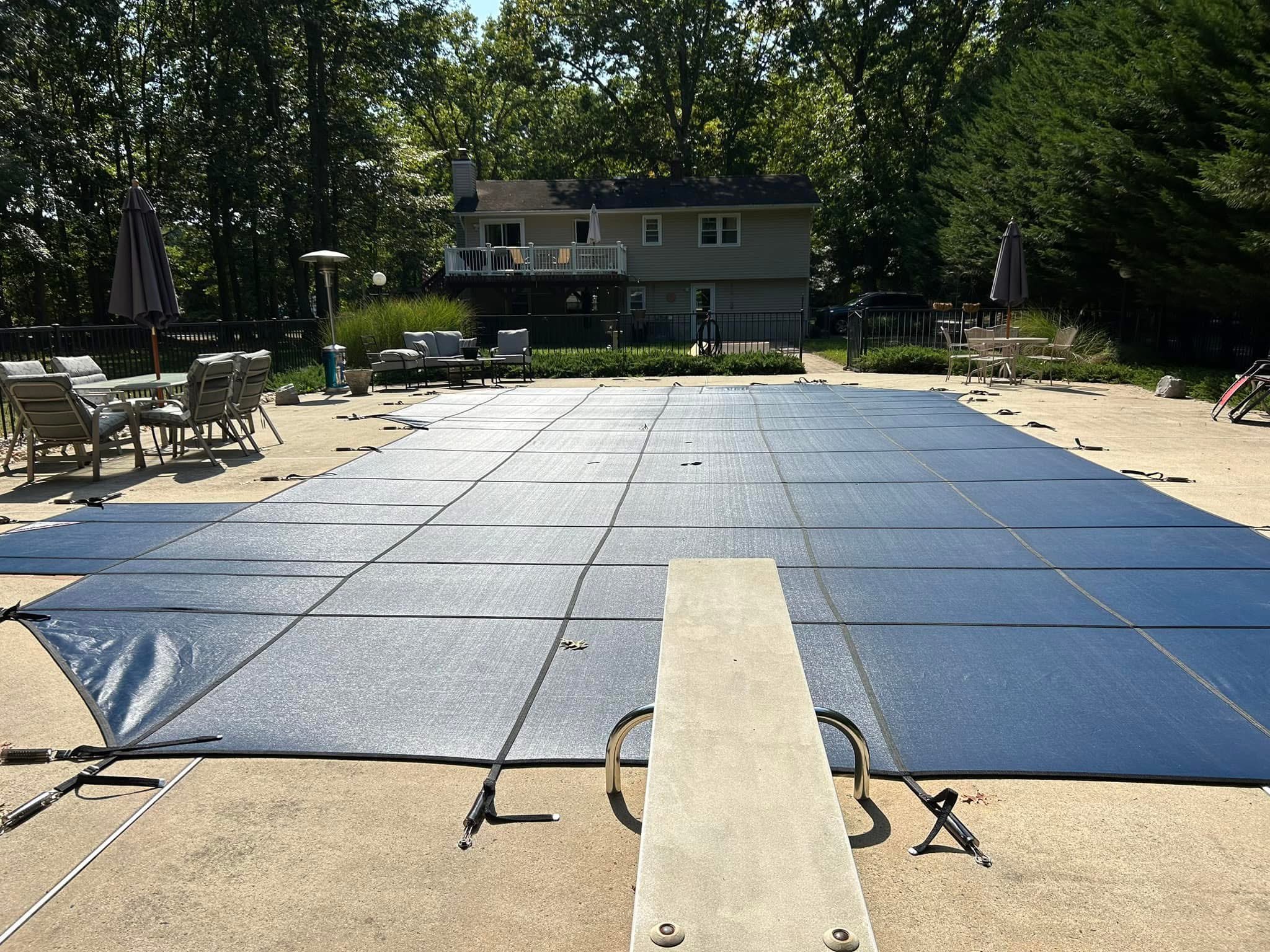
- Install the winter cover — Properly anchored and tensioned to withstand wind, snow, and ice
Common Winterization Mistakes
The most costly mistake is not blowing out the plumbing lines thoroughly. Even a small amount of water left in a pipe can freeze, crack the pipe, and cause hundreds or thousands of dollars in spring repair costs. Professional-grade equipment is essential for this step.
Other common mistakes include: closing the pool too late (risking freeze damage to equipment), not adding winter chemicals (leading to algae and staining), using a standard tarp instead of a proper winter cover, and failing to lower the water level correctly.
DIY vs. Professional Winterization
While some pool tasks can be safely done by homeowners, winterization is one service where professional expertise pays for itself many times over. The risk of incomplete line blowing, improper chemical treatment, or incorrect cover installation can lead to spring repairs that far exceed the cost of professional closing.
At Rivera Pool Service, Jeremy uses professional-grade air compressors to ensure every line is completely clear. He inspects all equipment, applies the correct chemical package for your pool's size and conditions, and secures the cover to withstand Ocean County's winter storms. When you open in the spring, you'll see the difference.
Ready to get started? Contact Rivera Pool Service for a free quote or call us directly at (732) 966-0625. Jeremy will get back to you within 2 hours.
Related Articles
Need Help Closing Your Pool?
Rivera Pool Service provides professional winterization throughout Ocean County.